Nations Competing in the 2026 World Cup are Represented to Various Degrees in Some Parts of the United States
As the United States hosts the 2026 International Federation of Association Football (FIFA) World Cup along with Canada and Mexico this month, soccer teams from around the world are likely to draw support from foreign-born fans in the United States.
The global tournament brings people from six continents to the United States, a nation shaped and developed by people from across the world. In the 2020 to 2024 ACS, 47.3 million foreign-born people called the U.S. home.
The foreign-born population is not evenly spread across the United States, with some global communities heavily concentrated in just a few states.
The World Cup offers a unique opportunity to examine how people from participating nations are represented across the country and where they live.
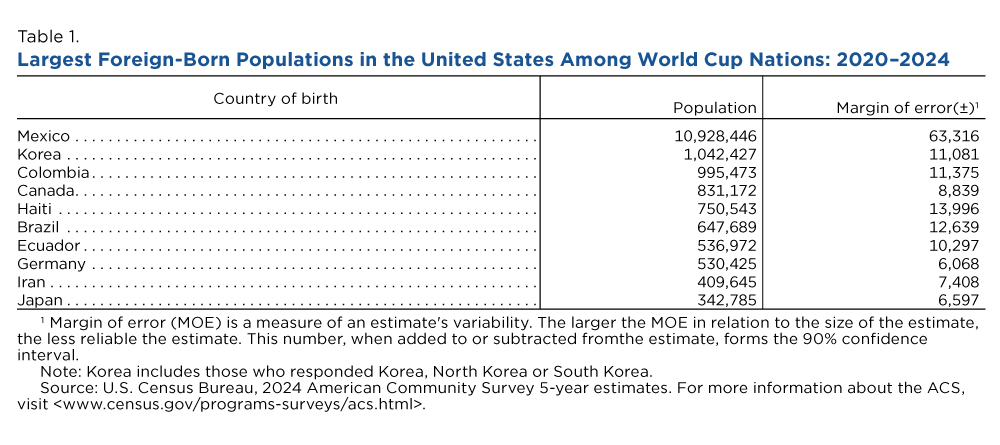
Among countries competing this summer, many have relatively small populations in the United States that are not large enough to be analyzed in detail. We focus on the 10 countries with the largest foreign-born U.S. populations and show how they are distributed across U.S. host cities.
One Clear Leader
No other country comes close to Mexico’s numbers, which stand far above the rest with nearly 11 million people in the United States born there. The next largest foreign-born populations in the United States with about 1 million or less are Korea and Colombia.
The rest of the top 10 list includes countries from many world regions.
Many Roads, Few Destinations
The foreign-born population is not evenly spread across the United States, with some global communities heavily concentrated in just a few states.
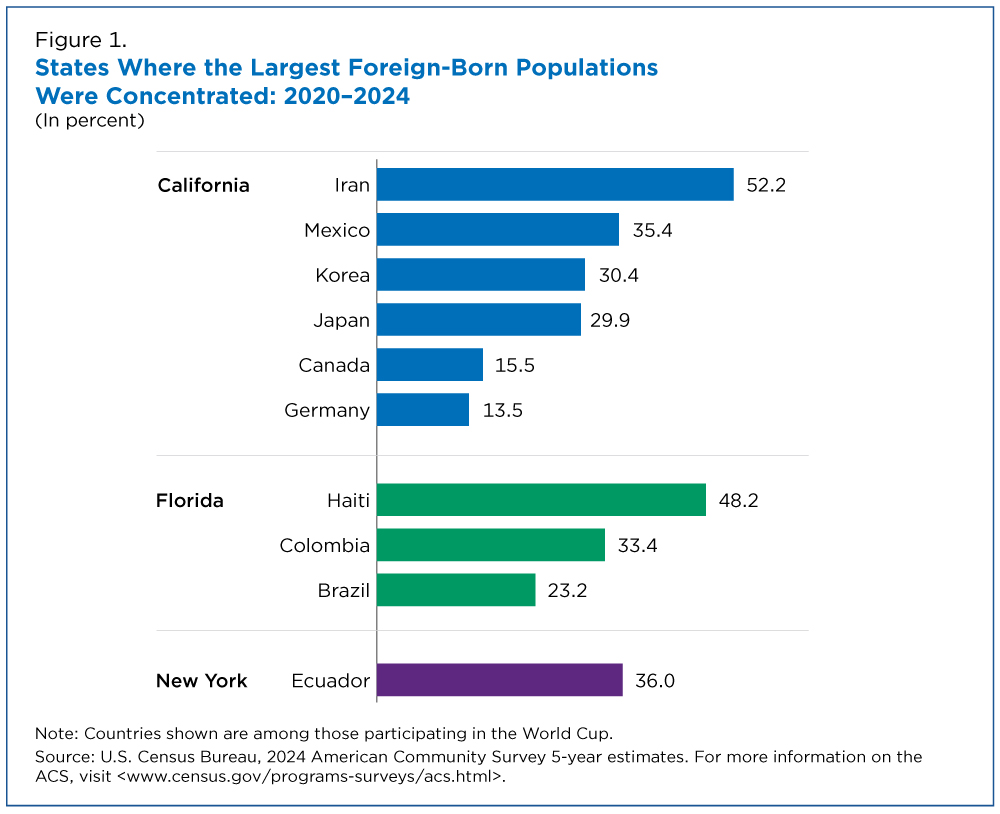
California, the nation’s most populous state, is home to the largest state shares of several foreign-born populations, including those from Canada, Germany, Iran, Japan, Korea, and Mexico.
Florida also stands out, especially for its high numbers of people born in Colombia, Haiti, and Brazil.
The concentration is particularly striking among some populations: more than half of the Iranian-born population in the United States lives in California, and nearly half of the Haitian-born population lives in Florida.
U.S. Host Cities From Miami to Kansas City
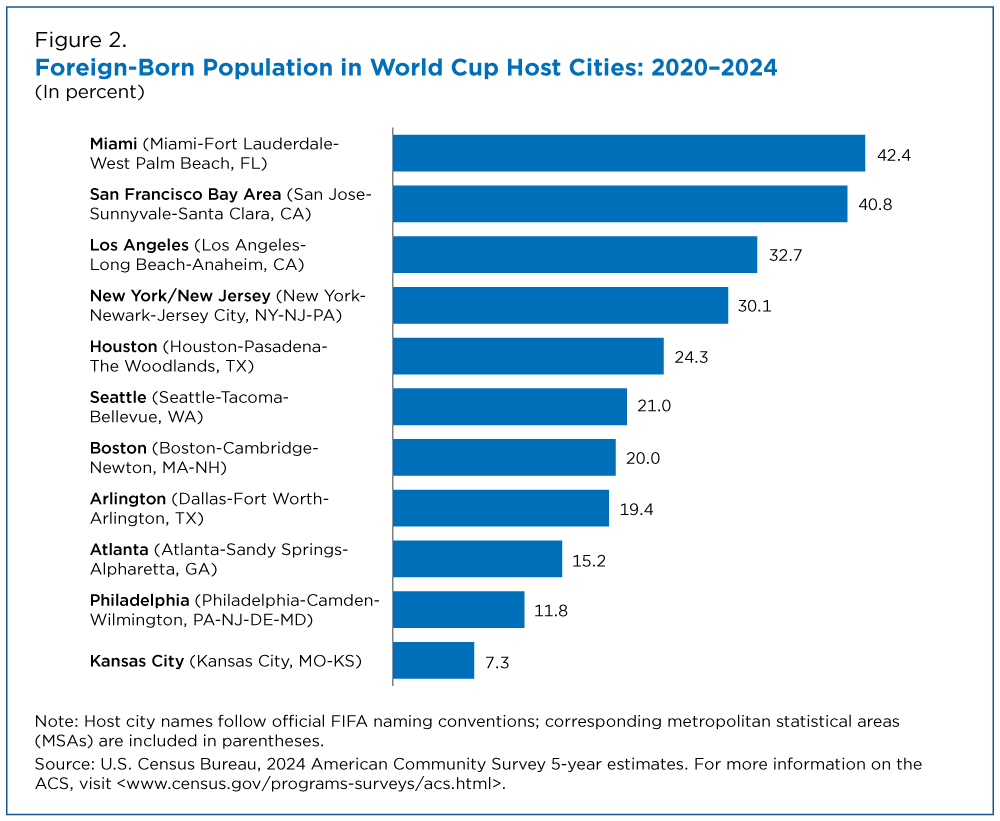
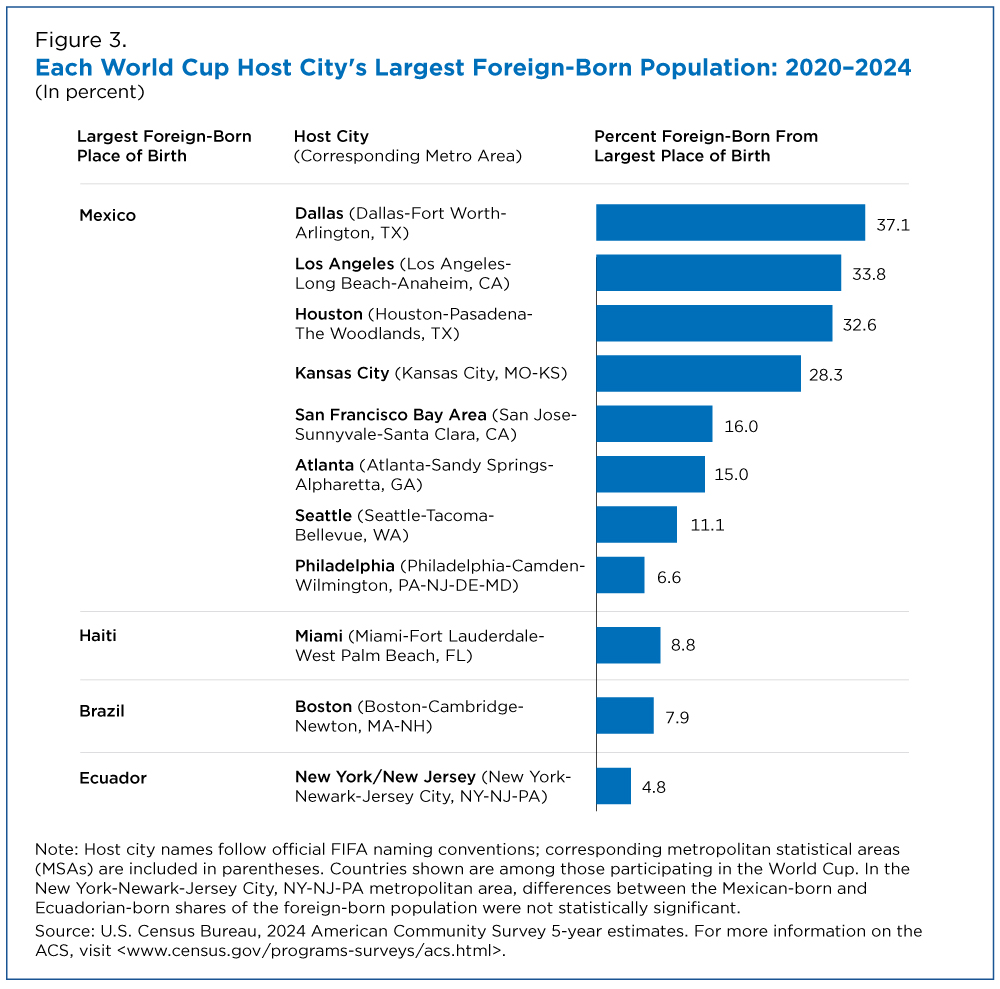
Foreign-born population shares vary widely across the 11 U.S. metro areas hosting World Cup matches.
In Miami and the San Francisco Bay Area (San Jose-Sunnyvale-Santa Clara metro area), over 40% of residents are foreign-born, compared with about 7.3% in the Kansas City metro area.
These differences reflect longstanding migration and settlement patterns across the United States.
On the East Coast, a Different Mix
In several East Coast host cities, no single country of birth accounts for a large share of the foreign-born population. Even so, a few groups still stand out:
- In the Miami metro area, the Haitian-born population accounts for about 8.8% of the foreign-born.
- The Ecuadorian-born population accounted for about 4.8% of the foreign-born population in the New York/ New Jersey metro area.
- Among Boston’s foreign-born population, 7.9% are from Brazil.
In the remaining U.S. host cities, including the Atlanta, Dallas, and Houston metro areas, Mexico is the top country of birth among the foreign-born population.
The World Cup brings people from many countries together on the field and in the stands.
Interested in learning more? Visit the Foreign-Born Population page for additional information and resources.
Related Statistics
Subscribe
Our email newsletter is sent out on the day we publish a story. Get an alert directly in your inbox to read, share and blog about our newest stories.
Contact our Public Information Office for media inquiries or interviews.
Related America Counts Stories
-
PopulationWhere Do Immigrants Live?April 09, 2024A new data visualization explores where immigrants live and how this changed over 10 years at the national, state and county levels.
-
Population2024 Paris Olympics: U.S. Population’s French ConnectionJuly 31, 2024More than 6 million people living in the United States reported French ancestry and 180,000 were foreign-born from France.
-
Families and Living ArrangementsOver a Quarter of Children Lived With At Least One Foreign-Born ParentFebruary 03, 2022A new report reveals that children living with at least one foreign-born parent are more likely to live with two parents than children with native-born parents.
-
Emergency PreparednessTornado Activity Shifts East — Heightening Risks in the SouthOctober 07, 2026Census data can help vulnerable communities that have a concentration of mobile homes cope with more frequent tornado activity over a longer season.
-
Families and Living ArrangementsU.S. Parents Gave $26.6 Billion to Their Adult Children in 2024September 30, 2026About 2.6 million parents provided financial support to 3.7 million children age 21 and over who did not live at home.
-
Business and EconomyAmerican Manufacturing: A History in Census DataSeptember 28, 2026On the 15th anniversary of Manufacturing Day, we celebrate the sector’s contribution to the U.S. economy.
-
EducationBeyond Diplomas: Nondegree Credentials Linked to Higher EarningsSeptember 22, 2026High school graduates and even those with college degrees earned more with nondegree credentials targeting specific work skills.