For Immediate Release: Monday, March 23, 2026
2026 Census Test Updates
U.S. Census Bureau to Conduct Pilot With U.S. Postal Service for 2026 Operational Test
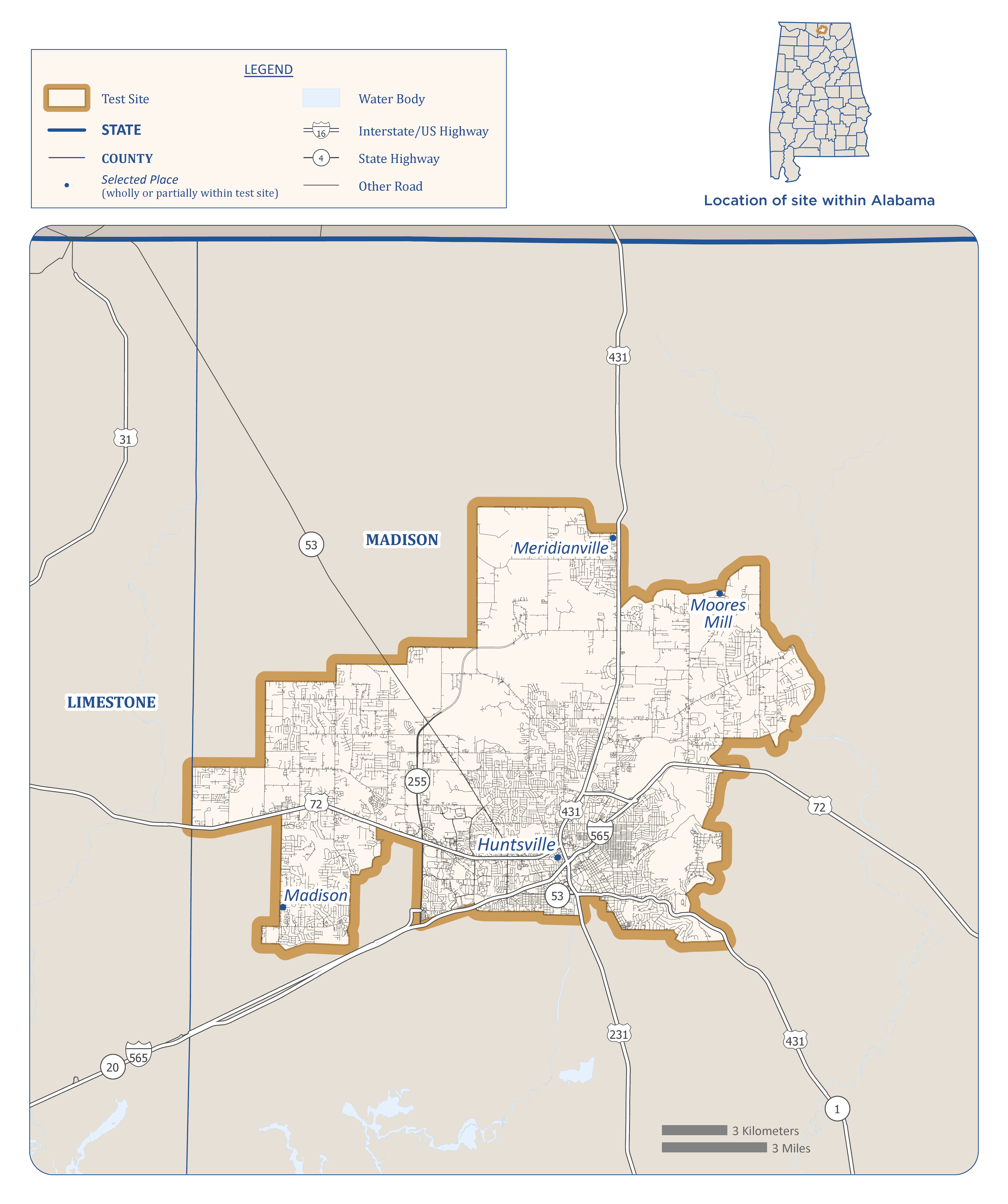
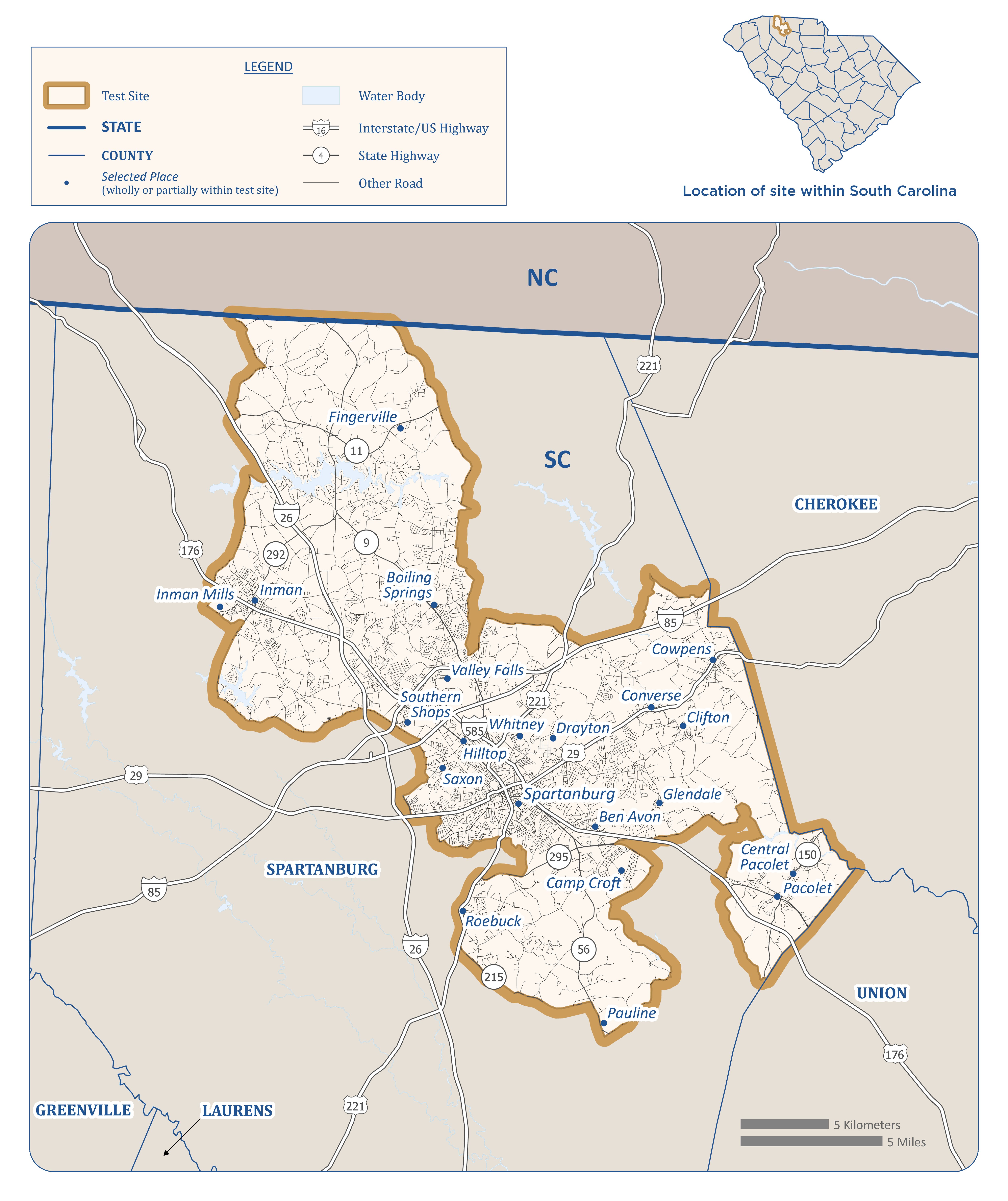
MARCH 23, 2026 — The U.S. Census Bureau last month announced it has modified its 2026 Census Test sites to Huntsville, Alabama, and Spartanburg, South Carolina. These sites were selected to give the Census Bureau the opportunity to explore how working with the U.S. Postal Service (USPS) could increase effectiveness and how to improve in-field enumeration processes for the 2030 Census.
Starting on May 1, the Census Bureau will invite approximately 154,600 households in Spartanburg and Huntsville to respond to the test online in English only via computer, smartphone and tablet. Phone and mail responses will not be offered.
2026 Census Test: Household Invitations
| Location | Approximate Number of Housing Units |
|---|---|
| Huntsville, Alabama | 81,000 |
| Spartanburg, South Carolina | 73,600 |
| Total | 154,600 |
The test will include the same questions asked in the American Community Survey (ACS), which collects detailed demographic, social, economic, and housing data. Questions are expected to take around 40 minutes to complete and include name, race, sex, citizenship and education.
A smaller subset of questions will be asked for households who do not respond on their own. Using the ACS allows the Census Bureau to leverage existing questions that the Census Bureau already asks.
Starting on June 1 and through August 31 when data collection ends, census takers, including postal workers, may visit households that do not respond on their own to collect responses in person. Responses to Census Bureau surveys are safe, secure, and protected by federal law. All responses are kept completely confidential and can only be used to produce statistics.
U.S. Postal Service Pilot to Support In-Field Enumeration
As part of a new collaboration designed to inform potential nationwide implementation in the 2030 Census, the Census Bureau and USPS will assess the feasibility of using postal workers to collect census responses from households that do not respond on their own. In Huntsville, the Census Bureau will directly hire postal workers to collect responses outside of their USPS work hours. In Spartanburg, postal workers in the pilot will integrate census duties into their regular mail delivery routes during work hours.
Postal workers in the pilot will have been background checked, receive census-specific training and will follow Census Bureau confidentiality provisions under Title 13 of the U.S. Code.
A combination of city and rural carriers will be used at each site, with participation in Huntsville also open to other postal employees. Approximately 25 postal workers, and 25 other (non-postal worker) census takers at each site, will visit households that do not respond on their own. This collaboration builds on the Census Bureau’s longstanding relationship with USPS and the vital role it plays in the census count.
Specific information for the pilot on each test site is below.
Huntsville: Census Bureau to Hire USPS Staff
In Huntsville, postal workers will be hired as Census Bureau employees to collect census responses. During the test, postal workers in this site will hold two separate federal positions (with USPS and the Census Bureau). There will also be other (non-postal worker) census takers collecting responses from households in the same area. Because census takers often have to visit households more than once, it is possible that a household is visited by both postal and non-postal census takers at this site.
- Census Bureau or USPS. Postal workers will perform census duties as Census Bureau employees and will not identify themselves as USPS staff. Households may not be able to distinguish whether the person collecting their responses is a postal worker or Census Bureau census taker.
- Census work hours. Postal workers will perform census duties outside their regular postal duties, as Census Bureau employees. This means respondents may see postal workers in the evening and on weekends. However, they will identify themselves solely as Census Bureau employees.
- USPS collaboration. The USPS will assist in recruiting its employees for the test.
- Pay. Postal workers will be paid the same rate of $19.75/hour as the other non-postal census takers collecting responses.
Spartanburg: USPS Workers as Special Sworn Staff
In Spartanburg, postal workers will collect responses in distinct locations from the other traditional, non-postal census takers. This means either a postal worker or non-postal census taker may visit a household depending on its location. Postal workers will collect census responses as USPS employees as part of their mail delivery route. They will clearly identify themselves and may be in their official USPS uniforms.
- Census Bureau or USPS. Postal workers will perform census duties as USPS employees only (and not as Census Bureau employees). They will be specially sworn in to uphold the same laws as Census Bureau employees.
- Census work hours. Postal workers will perform census tasks while delivering mail on their unique, assigned carrier route.
- USPS collaboration. The USPS will collaborate with the Census Bureau throughout the pilot.
- Pay. Postal workers will be paid their usual USPS rates.
In-Field Enumeration
In addition to testing whether the Census Bureau can leverage postal workers’ local knowledge and community relationships, the 2026 Census Test will evaluate and refine key processes including in-field enumeration. This involves improving field infrastructure, staffing, training, and in-person data collection methods.
A key focus will be to determine ways to reduce census taker visits to households that do not respond on their own. This can result in smaller field workloads, fewer census takers, and ultimately lower costs.
The 2026 Census Test will evaluate the viability of innovations planned for the 2030 Census and inform the Census Bureau’s readiness to achieve a complete and accurate count of the nation’s population.
For more details, visit the 2030 Census and 2026 Census Test webpages.
No news release associated with this report. Tip Sheet only.
###
Contact
Related Information