
Median Household Income Increased for Most Race and Hispanic Origin Groups in Majority of States Since Late 2000s
Median household income of almost all race and Hispanic origin groups increased in most states over the past 15 years (after adjusting for inflation) but fell among non-Hispanic White households in five states.
The U.S. Census Bureau today released the 2020–2024 American Community Survey (ACS) 5-year estimates, providing household income data to compare to the 2005–2009, 2010–2014 and 2015–2019 periods.
Nearly all race and Hispanic origin groups experienced increases in median household income in most states (including the District of Columbia and Puerto Rico) after adjusting for inflation between the 2005–2009 and 2020–2024 periods.
According to the latest ACS data, U.S. median household income was $80,734 during the 5-year period from 2020 to 2024 but varied by racial and ethnic group.
During 2020–2024, for example, Asian households had a median income of $116,503 compared to $55,157 for Black households.
The ACS 5-year estimates combine five consecutive years of 1-year ACS data, allowing us to examine smaller populations or geographies with more confidence.
State by Race Income Estimates
Exploring median household income by state reveals additional patterns by race and Hispanic origin both within and between states during the most recent 2020–2024 period.
The District of Columbia had the highest median household income at $109,870.
Within the District of Columbia, though, median income of Black households was $60,764 while that of non-Hispanic White households was $170,201.
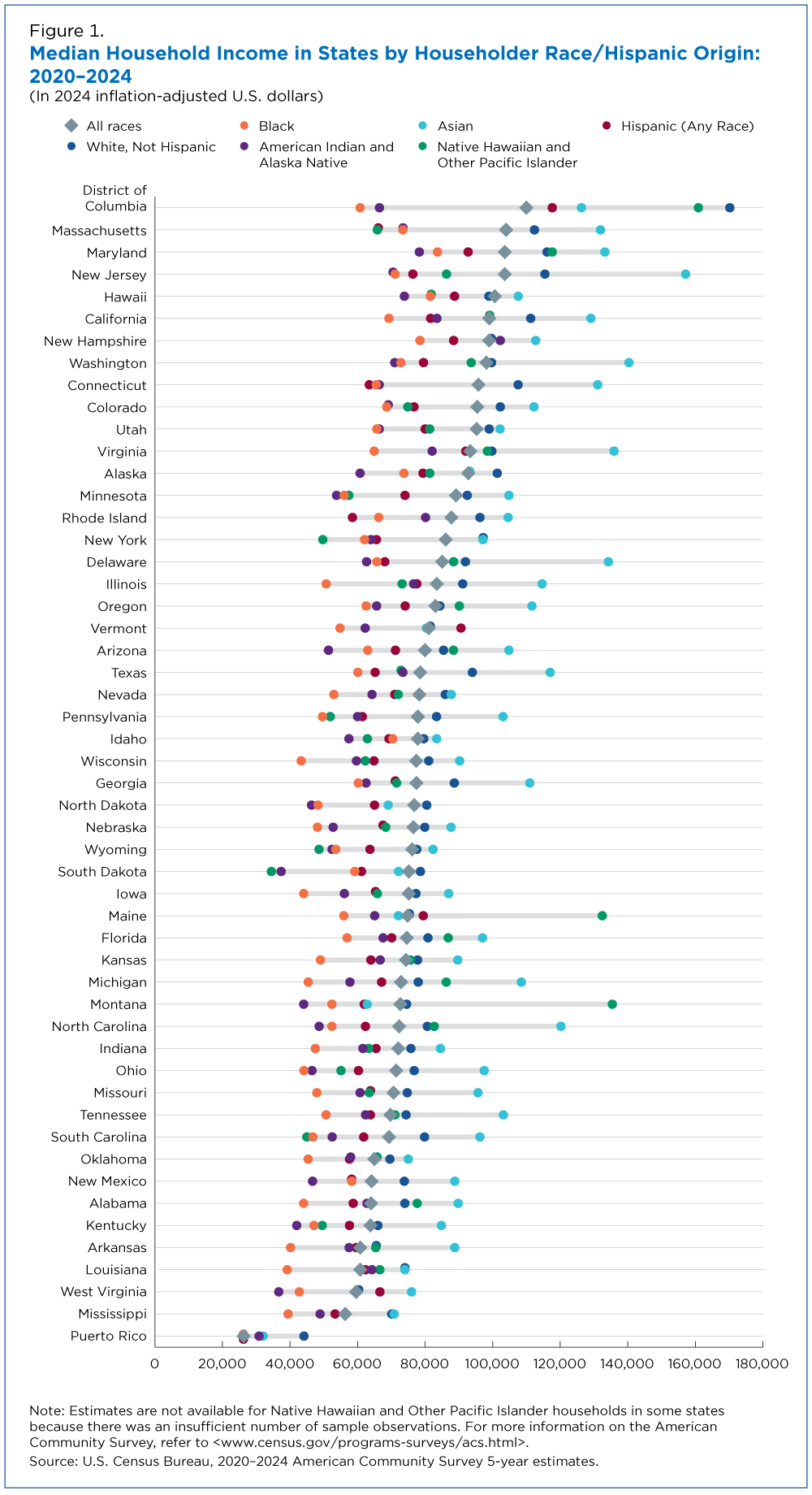
Some states saw less variation. In Idaho, for example, the difference between the highest- and lowest-earning race or Hispanic origin groups was about $26,000.
Even with the larger sample size provided by the ACS 5-year data, it’s still important to account for margins of error. Margins of error for median household income of smaller groups in lower population states may be large.
For example, while Native Hawaiian and Other Pacific Islander households in Montana had a median household income of $135,411 in the 2020–2024 period, their income was not statistically different from that of several other race and Hispanic origin groups in the state.
More details on the precision of ACS estimates are available on the ACS Code Lists, Definitions, and Accuracy webpage.
15 Years of Income Changes
Nearly all race and Hispanic origin groups experienced increases in median household income in most states (including the District of Columbia and Puerto Rico) after adjusting for inflation between the 2005–2009 and 2020–2024 periods.
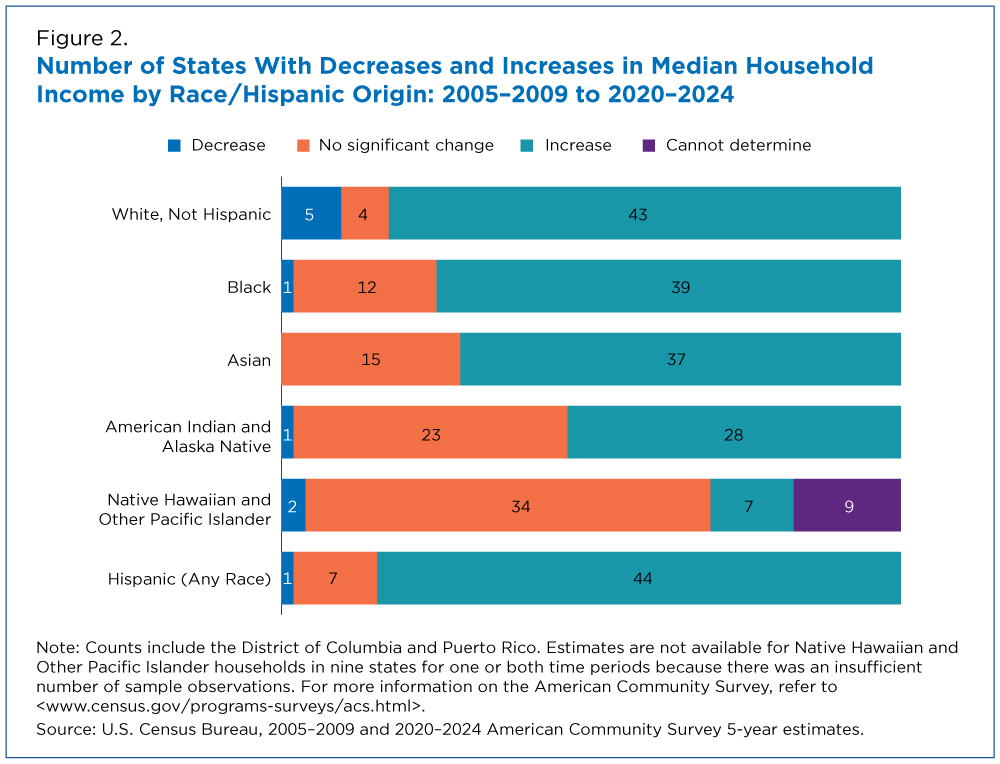
For instance, median income among Black households rose in 38 states and the District of Columbia over 15 years. Median income among Black households was not statistically different in 11 states and Puerto Rico and decreased in one state (Nevada).
Non-Hispanic White households saw some of the most consistent gains in income across states between these two time periods – median household income increased in 42 states and the District of Columbia.
But non-Hispanic White households’ median income also dropped in the highest number of states – five – during this time: Alaska, Connecticut, Louisiana, Nevada and New Mexico.
More About the Income Estimates in the ACS 5-Year Data
Most of the statistics in this article are derived from numbers available at data.census.gov.
To find median household income estimates by state, visit the B19013 table and use the geography filters to select your state.
Median household income estimates by race or Hispanic origin for the nation and states are available in the B19013A–B19013I tables and by selecting the appropriate geographic filter.
Users can also test differences between estimates for statistical significance using the ACS Statistical Testing Tool.
Additional ACS tables are available for other income topics, including median household income by household characteristics (S1903); earnings (S2001); income inequality (B19083); and poverty status (S1701).
Related Statistics
Subscribe
Our email newsletter is sent out on the day we publish a story. Get an alert directly in your inbox to read, share and blog about our newest stories.
Contact our Public Information Office for media inquiries or interviews.
-
HousingRental Costs Up, Mortgages Stayed FlatJanuary 29, 2026Newly Released American Community Survey compares 2020-2024 and 2015-2019 housing costs by county.
-
HousingShare of Owner-Occupied, Mortgage-Free Homes Up in 2024January 29, 2026The share of U.S. homeowners without a mortgage was higher in 2024 than a decade earlier nationwide and in every state, though not all counties saw increases.
-
Income and PovertyNo Significant Change in Estimated U.S. Median Household IncomeSeptember 09, 2025Compared to pre-pandemic estimates from 2019, only Hispanic households experienced a significant increase in median household income in 2024.
-
Emergency PreparednessEarthquake Risk May Hit Closer to Home Than You ThinkOctober 14, 2026The 140th anniversary of the Charleston earthquake reminds us of the risks to people, housing and economies in places not typically associated with earthquakes.
-
Emergency PreparednessTornado Activity Shifts East — Heightening Risks in the SouthOctober 07, 2026Census data can help vulnerable communities that have a concentration of mobile homes cope with more frequent tornado activity over a longer season.
-
Families and Living ArrangementsU.S. Parents Gave $26.6 Billion to Their Adult Children in 2024September 30, 2026About 2.6 million parents provided financial support to 3.7 million children age 21 and over who did not live at home.
-
Business and EconomyAmerican Manufacturing: A History in Census DataSeptember 28, 2026On the 15th anniversary of Manufacturing Day, we celebrate the sector’s contribution to the U.S. economy.