
Women Still Outnumbered Men Among the Oldest, but Gap is Narrowing
The nation turns 250 this year and Americans’ median age — the age at which half of the population is younger and half is older — continues to rise, climbing from 39.2 in 2024 to 39.4 in 2025.
We use population estimates released today to examine changes in the U.S. age structure by sex from 2001, when the median age was 35.6, to 2025.
One striking shift is that while women continued to outnumber men at older ages, the gap between the sexes narrowed in the past 25 years (Figure 1).
"Mortality rates for older men have been decreasing faster than for women and, as a result, men's share of the older population has increased."
— Marc Perry, senior demographer in the U.S. Census Bureau’s Population Division
In 2001, there were 70.6 males for every 100 females age 65 and older. By 2025, the ratio had increased substantially to 81.6.
The gap among those age 80 and older narrowed even more dramatically — from 50.9 males per 100 females in 2001 to 68.3 in 2025.
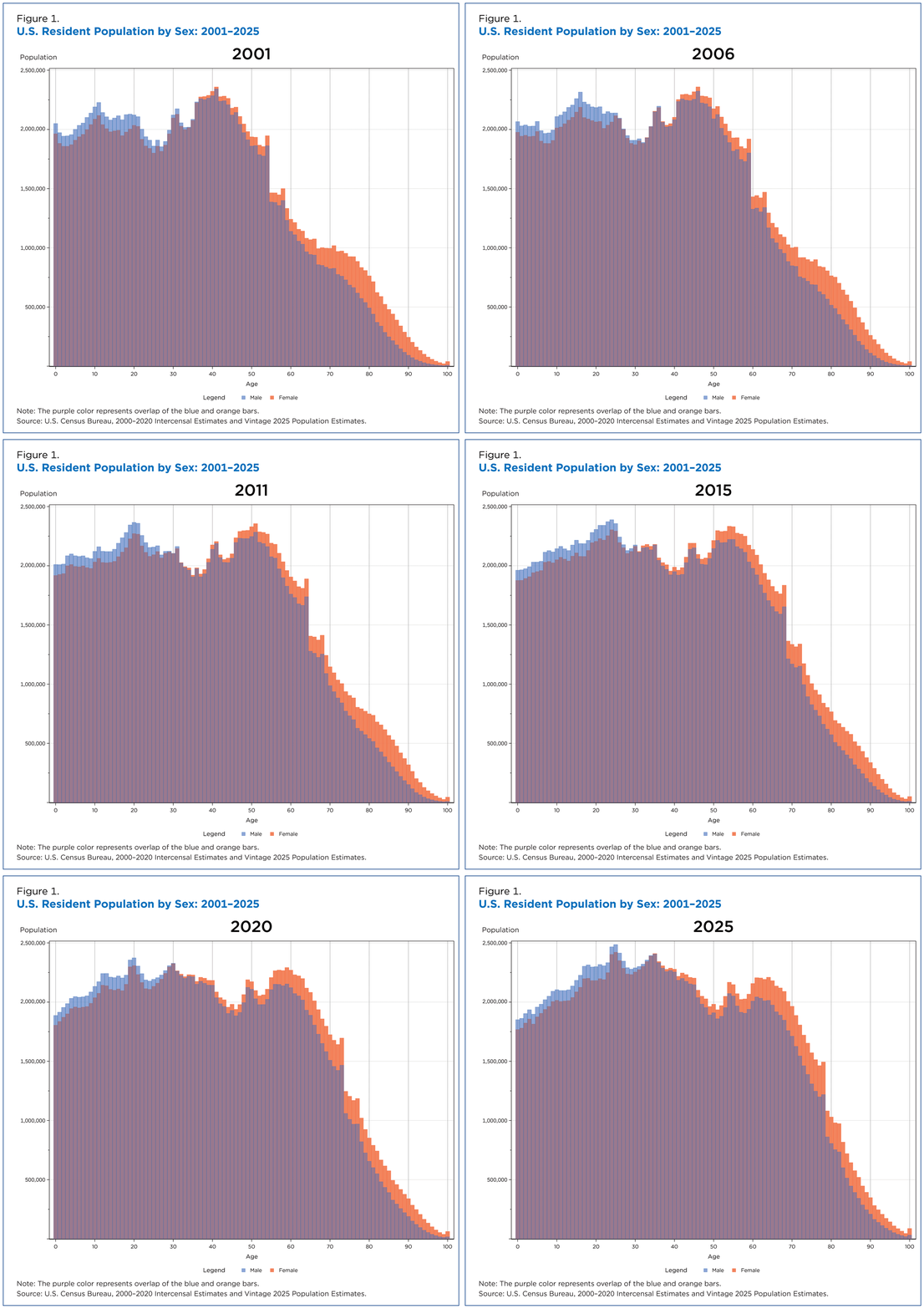
"Mortality rates for older men have been decreasing faster than for women and, as a result, men's share of the older population has increased," said Marc Perry, senior demographer in the U.S. Census Bureau’s Population Division. "But the mortality gap between men and women is still there. In fact, the current mortality rate for men age 65 and older is roughly where the equivalent rate for women was 50 years ago."
According to the National Center for Health Statistics (NCHS), the age-adjusted death rate for males age 65 and older was 8,285.0 per 100,000 people in 1970. By 2022, it had dropped to 5,205.7, a decline of 3,079 deaths per 100,000.
Female mortality also dropped, but not as rapidly. The death rate for females age 65 and older was 5,621.3 per 100,000 people in 1970 and 3,918.7 in 2022, a decline of 1,703 deaths per 100,000.
The Tales Population Pyramids Can Tell
Figure 2 shows the U.S. population pyramid for 2025, with males on the left (blue) and females on the right (orange).
In 2025, the population pyramid shows clear bumps in certain age ranges like 61 to 79. People in this group — which includes those born between 1946 and 1964 during the post-World War II fertility surge — are often referred to as baby boomers.
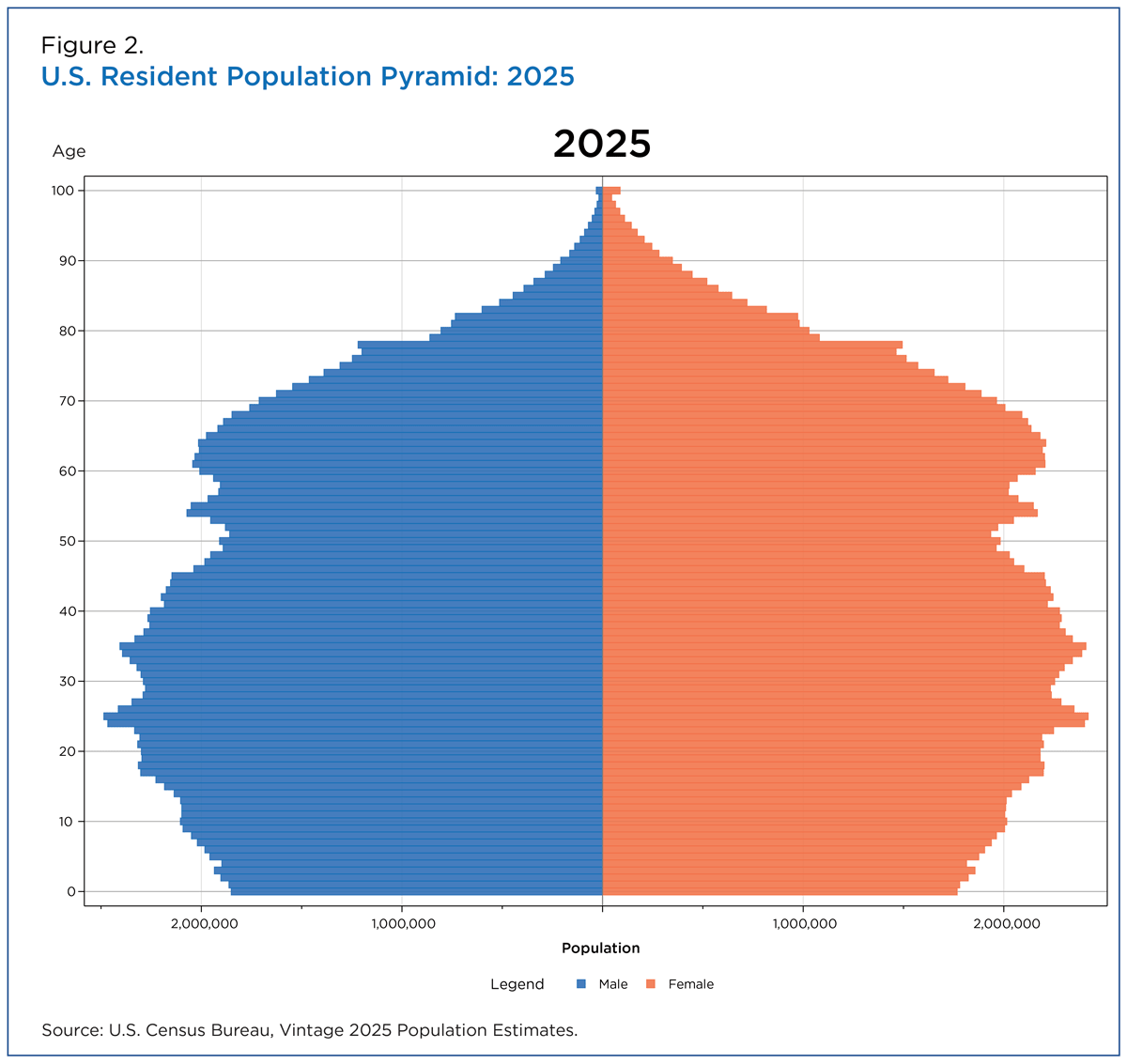
Despite its size, the distinct visibility of the baby boomers as a group has diminished as they age and their mortality increases. Their prominence has also been diluted by the growth in younger age groups, largely due to immigration.
The shift is vivid when we animate the population pyramid from 2001 to 2025 (Figure 3).
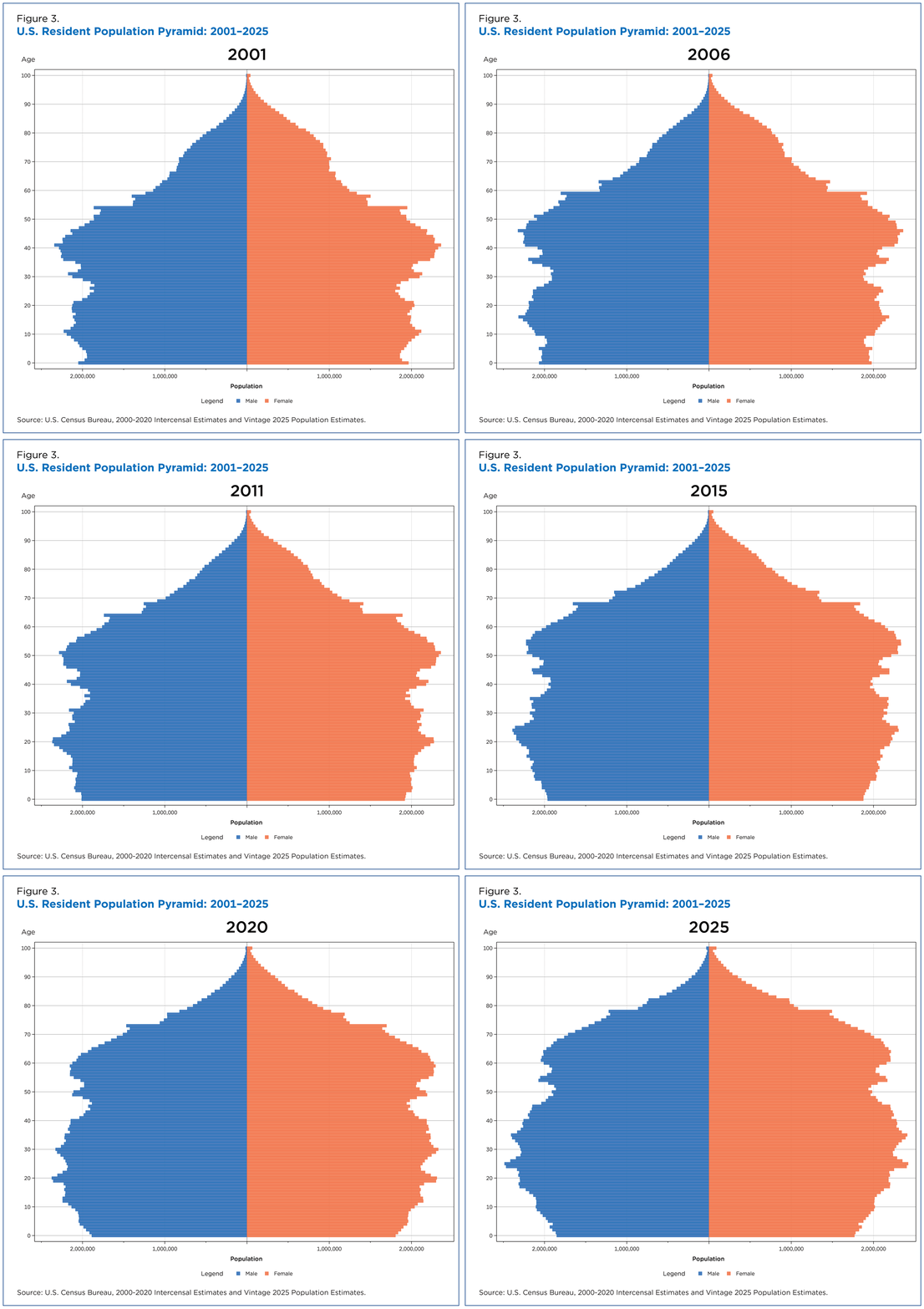
Another notable change is the impact of declining fertility, apparent in the narrowing of the bars at the youngest ages as we move forward in time.
In 2001, the total fertility rate (TFR) was 2.11 births per woman, according to the NCHS. By 2024, the fertility rate had dropped to 1.63 births per woman. At the peak of the baby boom in 1957, the TFR was more than double at 3.77.
“With the persistently low fertility rates in recent years and baby boomers experiencing higher mortality, the age structure of the U.S. population has morphed over time,” Perry said. “These trends have also contributed to the slowdown in national growth in recent years.”
History and the Gap Among Older Males and Females
Why women outnumber men at older ages has been attributed to a combination of behavioral, lifestyle and biological factors. Another explanation is generational history.
In 2001, the Greatest Generation was between 74 and 100 years old. Closely tied to World War II, its members were between 18 and 44 when the war ended in 1945. This generation’s sex disparity — fewer men than women — reflects, in part, the heavy toll of male lives lost during the war decades earlier.
As that generation grew older, the gap gradually narrowed as cohorts whose mortality was less affected by war entered those age groups.
Future Implications
As the population ages and the traditional longevity gap between men and women narrows, there could be some potential social impacts, including:
- Health care. An aging population could put a strain on skilled nursing facilities and health care workers.
- Dependency ratio. The U.S. dependency ratio may also increase, which could place additional pressures on the working-age population to support health care, social services, education and other institutions.
- Later marriages. As people live longer, they have more time to divorce or (re)marry at older ages. The decreasing disparity in the number of older men and women could create a more balanced pool of eligible partners at later ages.
- Extended families. If men continue to see improvements in old-age mortality rates, people could have more time to spend with their aging parents and grandparents — especially fathers and grandfathers.
Like the baby boom, sudden demographic shifts are possible and could alter the trajectory of the age structure of the United States over the next 25 years.
Upcoming releases of the Census Bureau’s population estimates will help us monitor future population changes.
In May, new subcounty estimates will reveal how cities and towns have changed in the last year. In June, the Census Bureau is set to release age, sex, race, and Hispanic origin estimates for the nation, states, counties, and metropolitan and micropolitan statistical areas.
Related Statistics
Subscribe
Our email newsletter is sent out on the day we publish a story. Get an alert directly in your inbox to read, share and blog about our newest stories.
Contact our Public Information Office for media inquiries or interviews.
-
PopulationAn Aging Nation: U.S. Median Age Surpassed 39 in 2024June 26, 2025Median age rose in 85% of the nation’s 387 metro areas from 2020 to 2024 and was higher than the national median of 39.1 in almost half of metro areas.
-
PopulationOlder Population Grew in Nearly All U.S. Metro AreasJune 27, 2024New 2023 metro area population estimates by age show increases in older adults in almost all metro areas, with decreases in young people in many metro areas.
-
PopulationSome Like it Hot: County Domestic Migration Trends From 2011 to 2025March 26, 2026Counties that once attracted droves of domestic migrants have cooled off and other counties have replaced them as popular migration destinations.
-
Emergency PreparednessTornado Activity Shifts East — Heightening Risks in the SouthOctober 07, 2026Census data can help vulnerable communities that have a concentration of mobile homes cope with more frequent tornado activity over a longer season.
-
Families and Living ArrangementsU.S. Parents Gave $26.6 Billion to Their Adult Children in 2024September 30, 2026About 2.6 million parents provided financial support to 3.7 million children age 21 and over who did not live at home.
-
Business and EconomyAmerican Manufacturing: A History in Census DataSeptember 28, 2026On the 15th anniversary of Manufacturing Day, we celebrate the sector’s contribution to the U.S. economy.
-
EducationBeyond Diplomas: Nondegree Credentials Linked to Higher EarningsSeptember 22, 2026High school graduates and even those with college degrees earned more with nondegree credentials targeting specific work skills.