
Jobs, Warm Weather and Retirement Destinations Contribute to Domestic Migration Patterns
Patterns of county-level domestic migration — people moving from one county to another — can change significantly over time.
Migration can be sensitive to sometimes sudden external forces, highlighting the importance of analyzing patterns over time and not in isolation.
The start of the COVID-19 pandemic in 2020 disrupted many domestic migration patterns, and migration rates of the top counties dropped significantly that year compared to prior years.
For example, some of last decade’s domestic migration hot spots are no longer attracting as many people, and new migration magnets have surfaced in recent years.
Figure 1 shows how domestic migration rates evolved from 2011 to 2025.
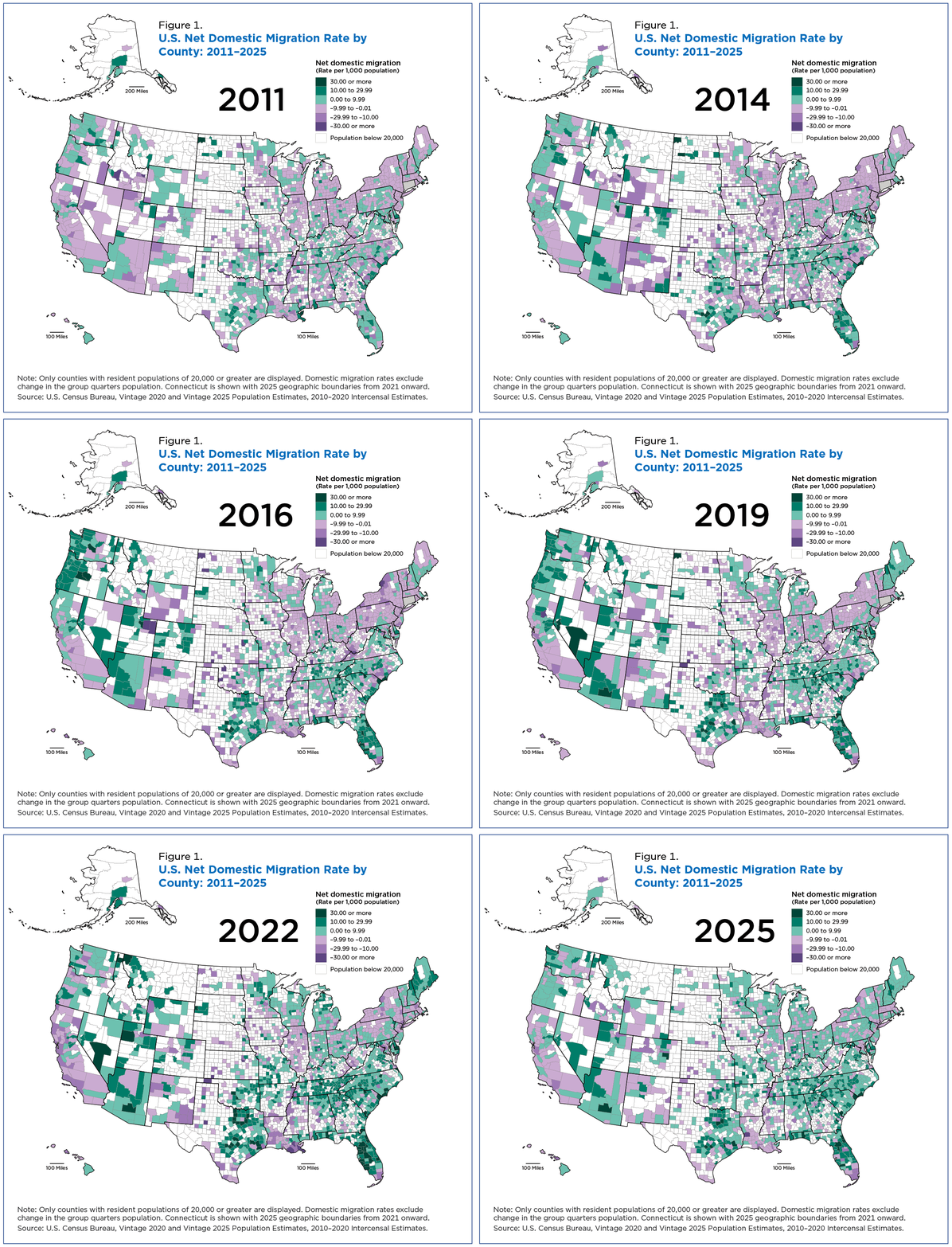
Our analysis examines top domestic migration destinations in five-year spans between 2011 and 2025. We identify some of the potential drivers of change in migration patterns, which range from economic opportunity and retirement enclaves, particularly in areas with warmer weather, to sprawling growth outside of cities.
County domestic migration rates were calculated for each year from July 1 to June 30 based on the Census Bureau’s Vintage 2025 population estimates released today.
We focus on movement of the household population and exclude the group quarters (GQ) population (such as college dormitories, prisons, and nursing facilities) from our calculation of domestic migration rates due to its volatility — particularly during the COVID-19 pandemic. Additionally, we limit our analysis to counties with populations of at least 20,000 in a given year.
To explain these migration patterns, we analyzed data on age-specific migration from our internal (nonpublic) population estimates. However, similar analyses can be obtained publicly from the Applied Population Laboratory at the University of Wisconsin.
2011-2015: Boom in Western North Dakota, Retirement Migration in Central Florida
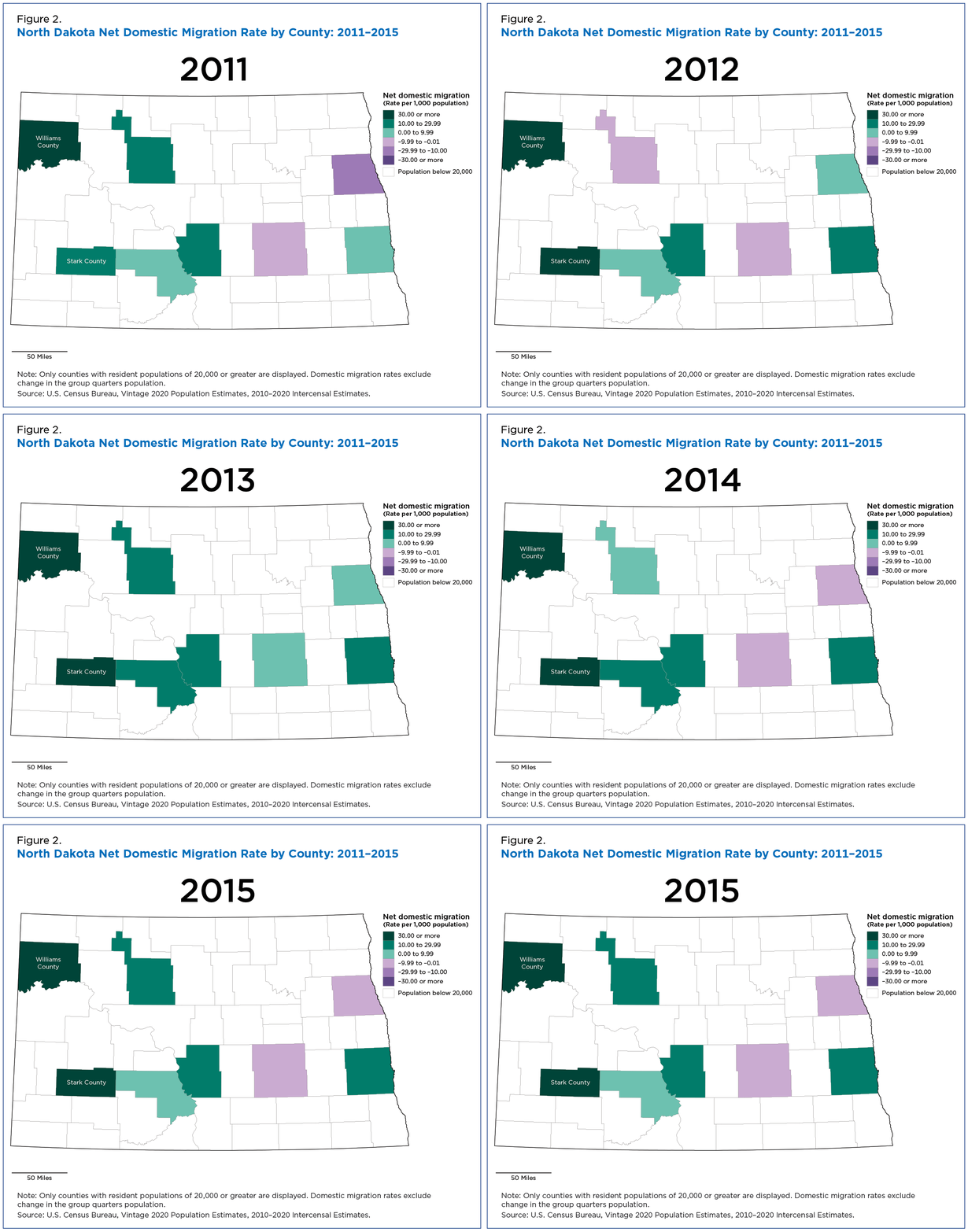
Williams County, North Dakota, had the highest domestic migration rates from 2011 to 2015, largely fueled by oil and gas production of the Bakken and Three Forks Formations. This oil boom most notably corresponded with an increase in the working-age male population.
For similar reasons, nearby Stark County, North Dakota, also had high domestic migration rates each year during this period — and was the second-highest migration county in 2012 and 2014.
Figure 2 shows domestic migration rates in North Dakota’s more populous counties for this period.
Between 2011 and 2015, Sumter County, Florida, consistently ranked second or third among U.S. counties by domestic migration rate, though its popularity was likely for leisure rather than work. Home to The Villages retirement community, Sumter expanded rapidly over these five years.
Benefitting from baby boomers hitting retirement ages, The Villages and the three counties (Sumter, Lake and Marion) it spans continued to have high domestic migration rates among older populations.
2016-2020: Suburban Counties Surge, Retirement Retreats Hold Strong, COVID-19 Disrupts
Counties outside of growing cities often benefit from employment growth, housing development, and suburbanization as these areas expand.
Take Texas, for example.
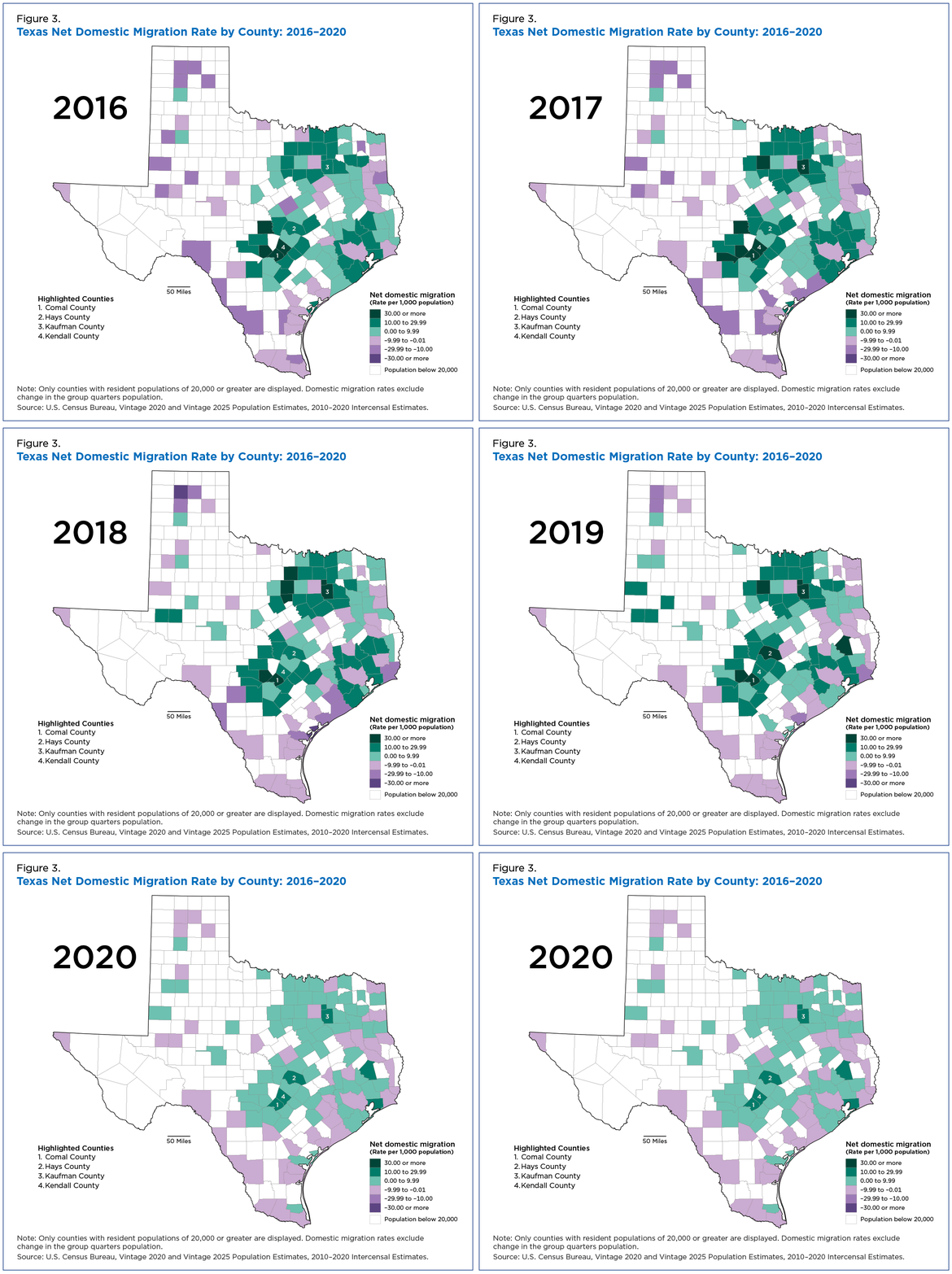
Here, Comal, Kendall and Hays counties — between the cities of San Antonio and Austin — experienced some of the nation’s highest domestic migration rates between 2016 and 2019. In 2017, Kendall County, just north of San Antonio, took the nation’s No. 1 spot in net domestic migration rates, a year after ranking second.
Kaufman County, just east of Dallas, claimed the top spot in 2019.
Figure 3 shows domestic migration rates in Texas for this period.
Along the South Atlantic coast, Brunswick County, North Carolina, and Horry County, South Carolina, attracted high rates of domestic migration between 2016 and 2018, with Brunswick claiming the No. 1 spot in 2018.
Older Americans, particularly those age 55 and older, drove migration to these coastal counties for much of the past 15 years, just as Florida’s Sumter County continued to grow rapidly — suggesting that aging and retirement can be strong motivators for domestic moves.
The start of the COVID-19 pandemic in 2020 disrupted many domestic migration patterns, and migration rates of the top counties dropped significantly that year compared to prior years.
2021-2025: South Strengthens as Domestic Migration Powerhouse
Beginning in 2021, counties in five Southern states — Florida, Georgia, North Carolina, South Carolina and Texas — have increasingly topped domestic migration rankings.
Figure 4 shows domestic migration rates in the South for this period.
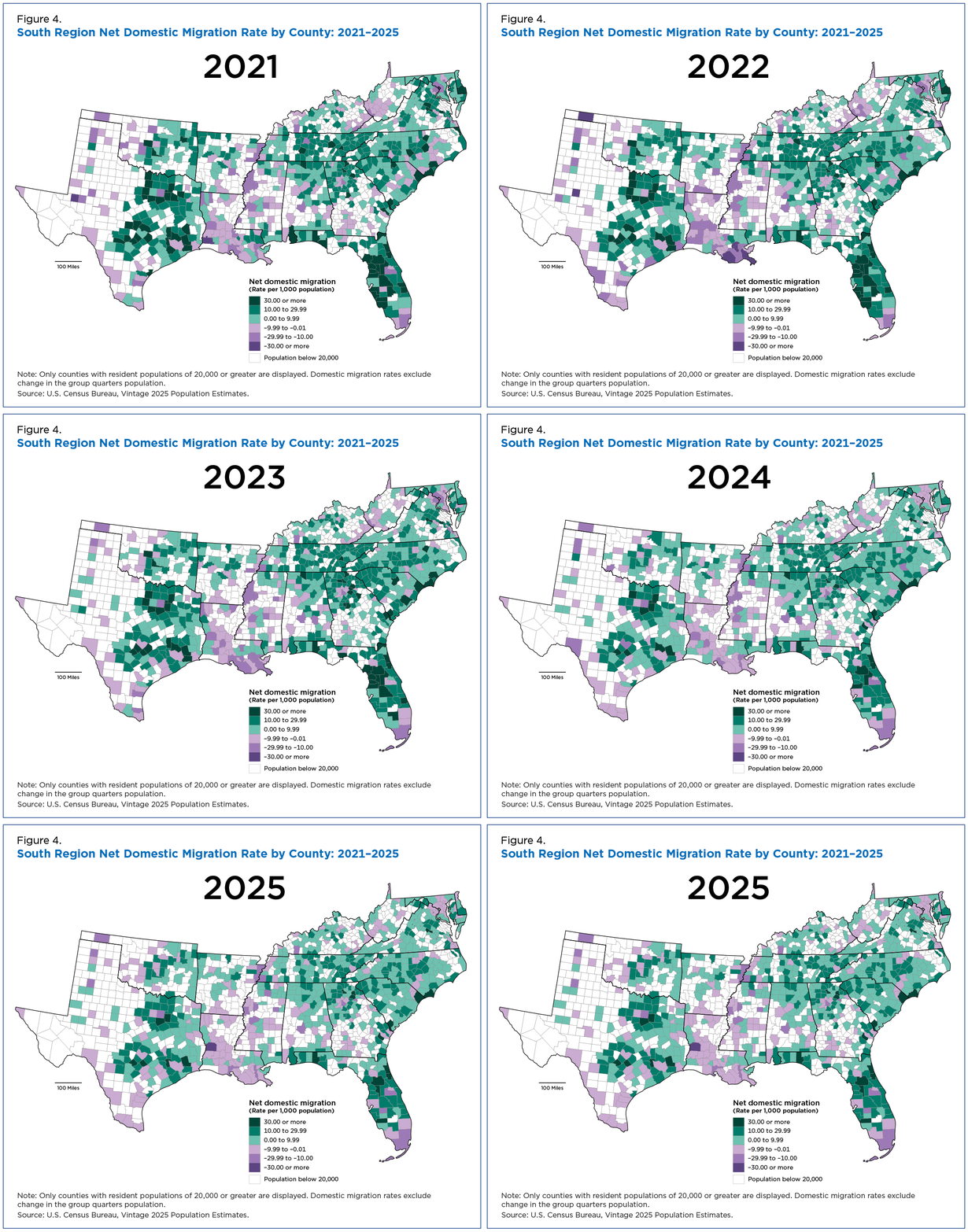
Texas’ Kaufman County, east of Dallas, had the nation’s highest domestic migration rates from 2021 to 2023, followed closely by its neighbor, Rockwall County.
Georgia’s Dawson and Jackson counties — north of Atlanta and close to the million-person counties of Fulton and Gwinnett — had the leading domestic migration rates in 2024 and strong showings nearly every year since 2021.
These counties continued the trend of areas growing outside of city centers in recent years.
In 2025, Jasper County, South Carolina, in the Hilton Head Island-Bluffton-Port Royal metro area, reached the top domestic migration spot after climbing from 17th in 2022 to 11th in 2023 to third in 2024. Located at the southernmost part of South Carolina, this is another spot that has attracted older migrants since the 2010s, suggesting a retirement-friendly setting.
What Will Determine Future Domestic Migration Hot Spots?
Domestic migration patterns in the future could evolve for many reasons – employment opportunities, new retirement locales, expansions outside of cities, or any number of external factors we did not discuss here.
As our analysis shows, the counties with the highest domestic migration rates changed over time – and will likely change again. Southern counties have recently claimed many of the top spots. But will they continue to dominate the domestic migration scene? That likely depends on future economic conditions, housing development and demographic shifts.
Related Statistics
Subscribe
Our email newsletter is sent out on the day we publish a story. Get an alert directly in your inbox to read, share and blog about our newest stories.
Contact our Public Information Office for media inquiries or interviews.
-
PopulationNet International Migration Down in Every State and Most CountiesMarch 26, 2026Census Bureau used new methodology to improve accuracy of county population estimates released today.
-
MigrationHomeward Bound: More People Moved Back Home at Height of PandemicJanuary 22, 2025Between 2019 and 2022, the share of movers who returned to their state of birth rose from about 4% to 5%.
-
PopulationWhich States Had the Highest Shares of Newcomers?April 29, 2025Many states with the highest share of recent movers from out-of-state in 2023 had relatively small populations.
-
Families and Living ArrangementsU.S. Parents Gave $26.6 Billion to Their Adult Children in 2024September 30, 2026About 2.6 million parents provided financial support to 3.7 million children age 21 and over who did not live at home.
-
Business and EconomyAmerican Manufacturing: A History in Census DataSeptember 28, 2026On the 15th anniversary of Manufacturing Day, we celebrate the sector’s contribution to the U.S. economy.
-
EducationBeyond Diplomas: Nondegree Credentials Linked to Higher EarningsSeptember 22, 2026High school graduates and even those with college degrees earned more with nondegree credentials targeting specific work skills.
-
Emergency PreparednessCalm Atlantic Hurricane Season Could Mean Active One in the PacificSeptember 17, 2026Census Bureau data tools can help communities prepare for and recover from hurricanes and other disasters wherever they are.